 Admin
Travel News
#Rome travel
#Ancient Rome
#Metro C Rome
#Italy tourism
#Budget travel Europe
Admin
Travel News
#Rome travel
#Ancient Rome
#Metro C Rome
#Italy tourism
#Budget travel Europe
10.04.2026
There are few cities in the world where catching a train feels like an act of time travel. Rome is now one of them. Since December 2025, two newly opened stations on the city's Metro C line have been turning ordinary commutes into encounters with ancient history, and tourists are already taking the metro purely for the experience.
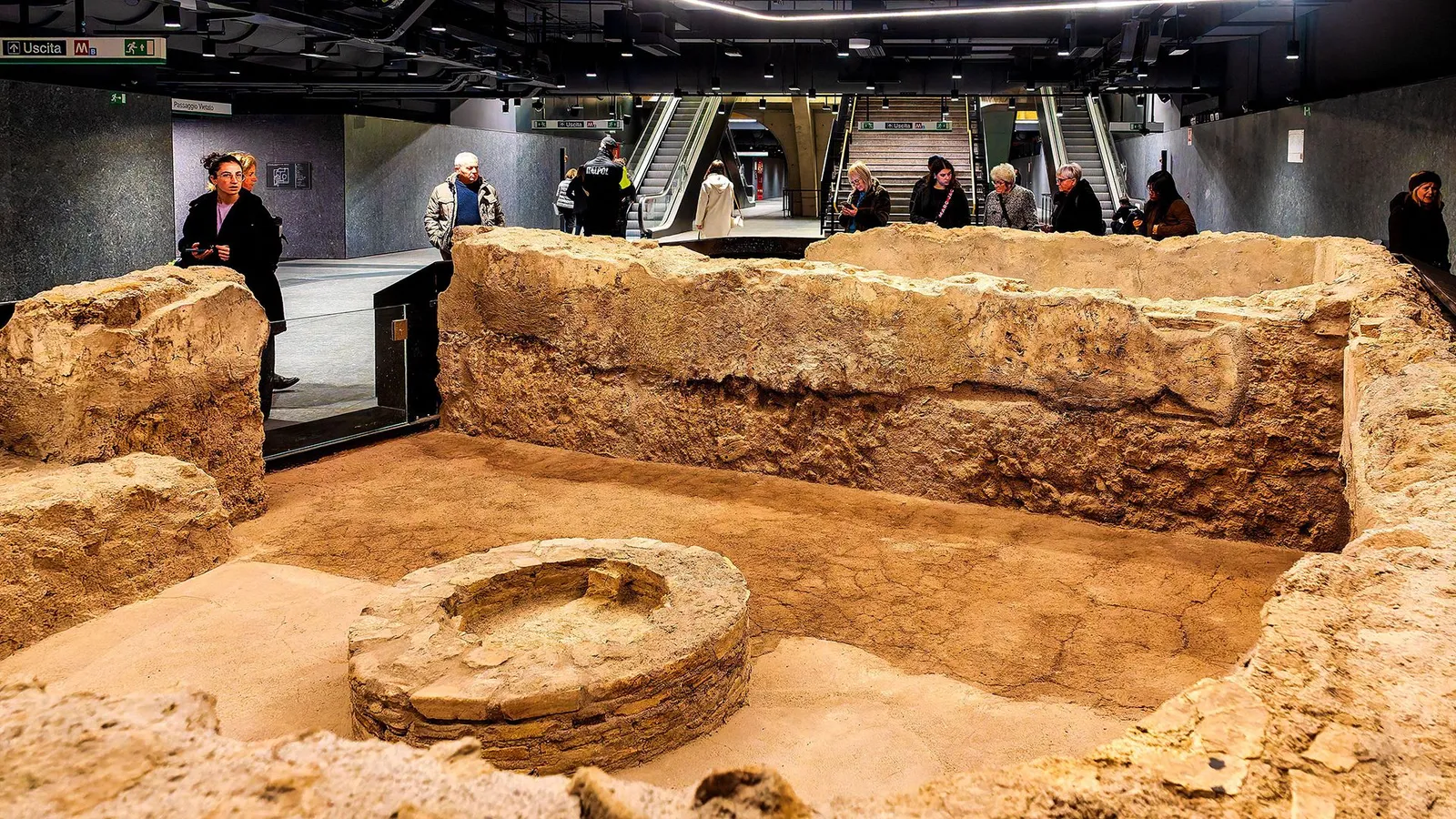
The stations, Colosseo-Fori Imperiali and Porta Metronia, have been dubbed "archaeo-stations" by the press. The term fits. Rather than concealing the ruins uncovered during their construction, Rome has done something quietly extraordinary: it has built the stations around them, turning transit infrastructure into a living archaeological record open to anyone with a metro ticket.
A line decades in the making
Metro Line C has been under construction for over two decades, delayed repeatedly by what lies beneath Rome's streets. Digging anywhere near the city centre means moving through layer after layer of civilisation, medieval settlements resting atop imperial structures, which in turn sit above the remnants of the Roman Republic. Construction teams working on Line C have uncovered more than 500,000 artefacts to date, and every significant find required a pause, an assessment, and often a complete rethink of the engineering approach.
Some excavators were required to dig by hand in particularly sensitive areas. Engineers developed specialist techniques, including freezing the ground to stabilise soil and constructing sacrificial concrete walls that were later demolished as work progressed. The result is a metro line that cost billions of euros and took far longer than planned, but has produced something no other city in the world can claim to offer.
"Beyond serving commuters and Romans, anyone who comes here from Italy or from abroad will stop in these stations. They might take the metro even if they don't need it, just to enjoy the ride." - Italian Transport Minister Matteo Salvini
What you'll find underground
At the Colosseo-Fori Imperiali station, located steps from the Colosseum itself, the displays are extraordinary by any museum standard. Behind glass screens, visitors can view ceramic vases and plates, stone wells, and the remains of a first-century cold plunge pool and thermal bath, all discovered during excavation. Archaeologists also uncovered 28 ancient wells at the site, some predating the construction of Rome's very first aqueduct in 312 BCE. Screens throughout the station document the excavation process, giving visitors a sense of how painstaking, and how remarkable, the work of recovery has been.
One stop away, Porta Metronia offers a different kind of encounter. Workers uncovered a nearly 260-foot military barracks dating to the early second century AD, along with a home featuring well-preserved frescoes and mosaics. A dedicated museum within the station is planned, with space set aside for the finds to be displayed in full. The scale and quality of what was found here delayed construction significantly, but the result is a space unlike anything else on a metro network.
Why a €1.50 ticket changes everything
A standard metro ticket in Rome costs €1.50. That price gives you access to both stations, to the artefacts displayed within them, and to a direct journey to the doorstep of the Colosseum, the Roman Forum, and the Imperial Fora, some of the most significant archaeological sites on earth. For budget travellers in particular, this represents extraordinary value. There is no additional admission charge to walk through the stations and view what is on display. It is all part of a standard transit journey.
This is precisely what makes the archaeo-station concept so compelling as a travel experience. Rome has long been associated with expensive queues and timed entry tickets. The metro sidesteps all of that, delivering ancient history at street level, below street level, and then right to the entrance of the monuments themselves.
A global trend with Roman ambition
Rome is not the first city to weave archaeology into its transit infrastructure. Thessaloniki opened a similarly ambitious metro in late 2024, with stations showcasing Roman-era roads and drainage systems. Xi'an, one of China's most historically layered cities, unearthed over 3,000 artefacts and 260 tombs during its first subway construction, many of which are now on public display. What Rome brings to this trend is the scale of the finds, the density of the history, and the ambition of what is still to come.
The full Metro C line, when completed around 2035, will eventually connect Rome's eastern suburbs to the Vatican, passing through Piazza Venezia, the very heart of the historic centre, where a future station is planned at a depth of 48 metres. Line C is designed to carry up to 800,000 passengers daily, significantly easing Rome's notorious traffic, while continuing to surface the city's past with every new section of tunnel.
Add it to your itinerary
For visitors to Rome, the archaeo-stations offer something the traditional tourist trail rarely delivers: genuine surprise. Most travellers arrive knowing what the Colosseum looks like. Far fewer expect to find a thermal bath from the Roman Empire displayed in the station they pass through on the way there. The experience rewards curiosity and costs almost nothing.
Whether you are spending a long weekend in the city or passing through as part of a wider Italian trip, boarding the metro at Colosseo-Fori Imperiali or Porta Metronia is worth doing in its own right. Sometimes the journey really is the destination, and in Rome right now, it costs exactly €1.50 to find out.